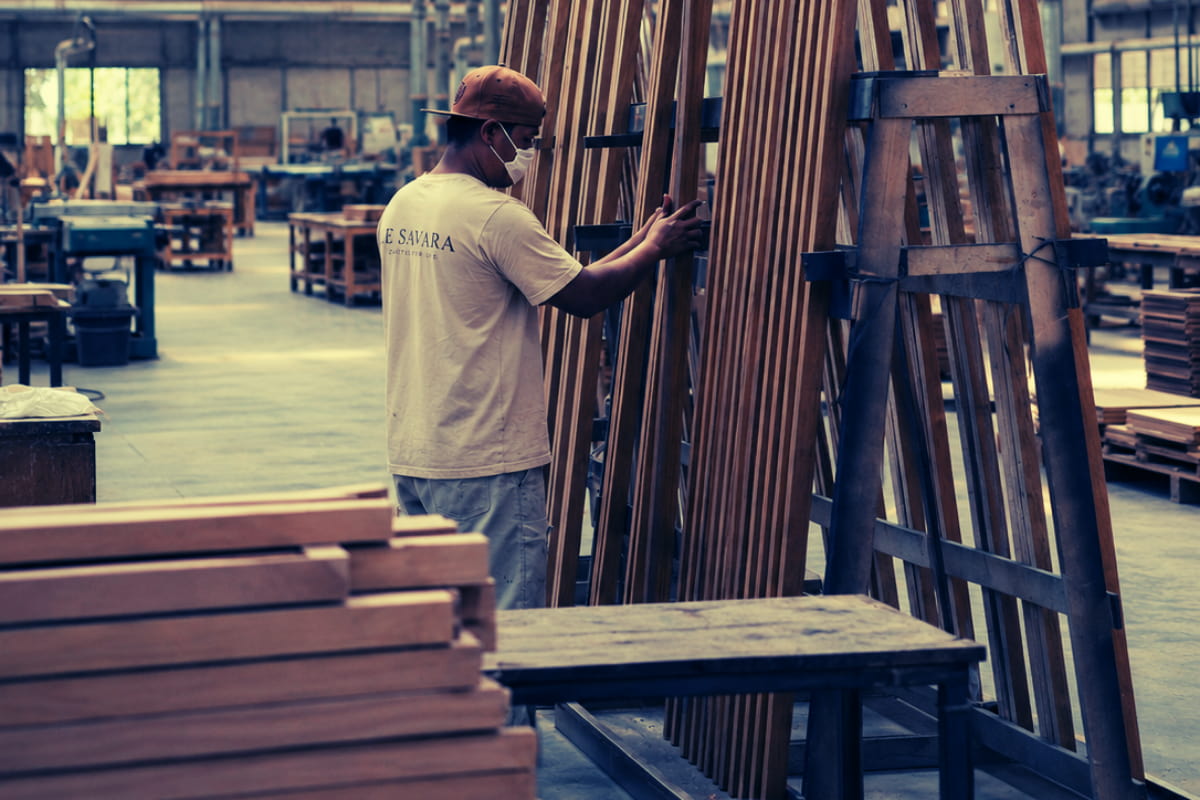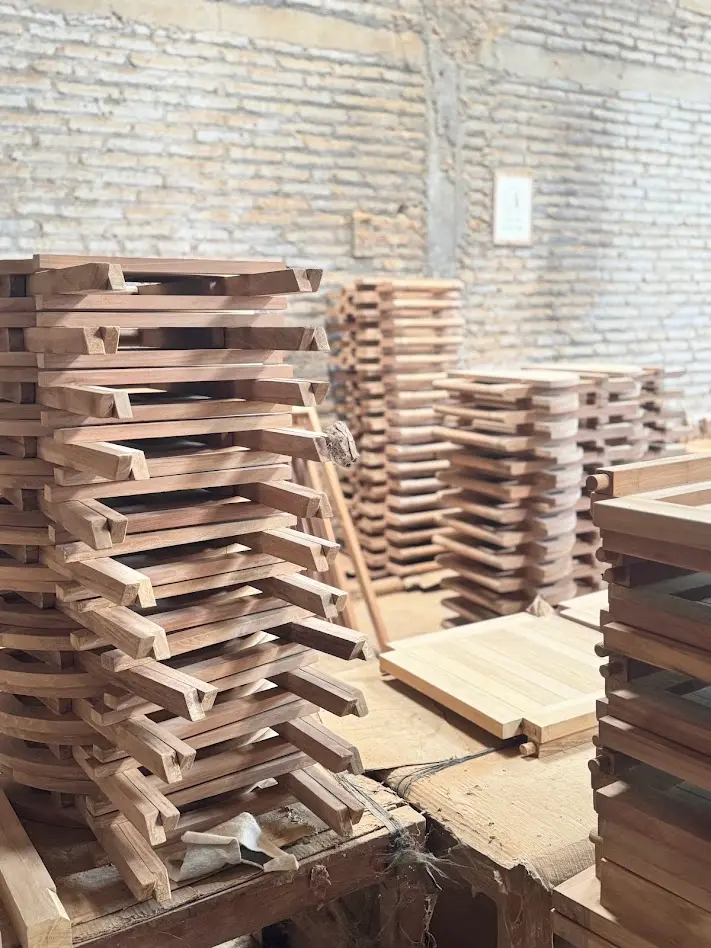

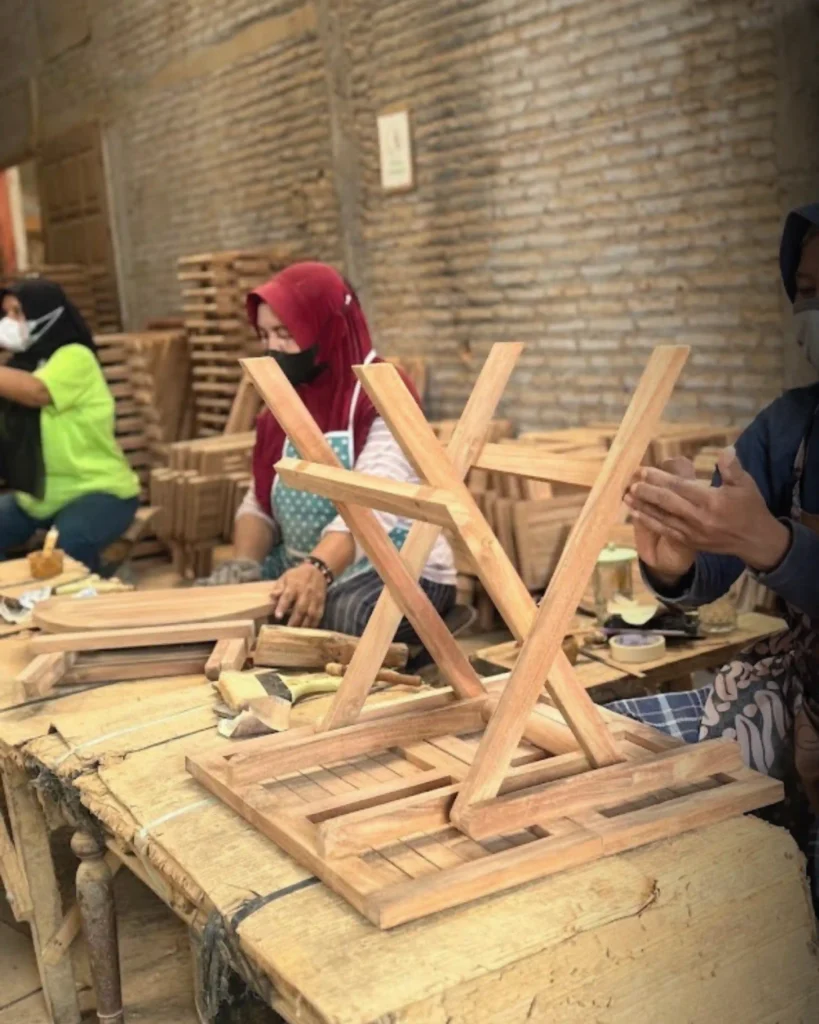
Indonesia is one of the world’s leading sources of natural-material furniture — teak, rattan, bamboo, and solid wood, shaped by generations of craftsmanship. If you’re looking to source furniture from Indonesia, the material and craft quality is rarely the problem.
The real risk is everything around production: finding a trustworthy partner, managing communication across time zones and language, controlling quality from a distance, and keeping a project on schedule when you’re not the one on the ground.
Why Indonesia Is a Leading Source for Natural Material Furniture
Indonesia’s furniture industry is built on decades of export experience and access to some of the world’s most sought-after natural materials:
- Teak, mahogany, and suar wood — durable, weather-resistant, and prized for both indoor and outdoor furniture
- Rattan and bamboo — lightweight, renewable materials suited to hospitality and resort-style interiors
- Hand-finishing and joinery traditions — carving, weaving, and mortise-and-tenon techniques passed down through generations of artisans
For hospitality and design projects specifically, this combination of material quality and craftsmanship is difficult to replicate at the same price point elsewhere — which is exactly why sourcing from Indonesia remains a strategic choice for FF&E and custom furniture programs.
The Real Challenge: It’s Not the Furniture, It’s the Coordination
Most guides to sourcing furniture from Indonesia focus on shipping documents and factory selection. Those matter — but for hospitality, architecture, and interior design buyers managing full projects, the actual points of failure are usually:
- No single point of accountability — a factory, a freight forwarder, and a customs agent, each managing their own piece, with no one owning the outcome
- Delayed or unclear communication — production issues surfacing late, after they’ve already cost time
- Inconsistent quality control — no independent inspection before goods leave the factory
- Custom production complexity — white-label or bespoke pieces requiring tighter spec management than off-the-shelf catalog items
If you’re sourcing a single piece for personal use, these risks are manageable. If you’re managing FF&E for a hotel, a multi-unit rollout, or a client-facing interior design project, they can quietly derail a timeline and a budget.
Step-by-Step: How to Successfully Source Furniture from Indonesia
1. Define whether you need a supplier or a procurement partner
A supplier sells you furniture. A procurement partner manages the sourcing, production, quality control, and logistics on your behalf — and is accountable for the outcome, not just the output. For one-off retail purchases, a supplier may be enough. For hospitality FF&E, custom production, or ongoing project work, a procurement partner materially reduces your risk.
2. Verify material legality and sourcing standards
Legitimate Indonesian wood exporters should hold SVLK certification (Indonesia’s Timber Legality Assurance System), confirming the timber was legally harvested and processed. This isn’t optional paperwork — it’s a baseline trust signal, and its absence should be treated as a red flag.
3. Clarify who is physically inspecting your goods
Photos are not quality control. Ask specifically who inspects goods on-site before they ship, and what that inspection covers — joinery strength, finish consistency, structural stability, and adherence to spec.
4. Understand your production timeline — and where delays actually happen
Delays rarely come from the factory floor itself. They come from sample approval rounds, customs processing, and communication lag between multiple disconnected vendors. A clear, documented timeline with defined checkpoints is a sign you’re working with an organized partner.
5. Decide between catalog collections and custom/white-label production
If you need standardized pieces at volume, existing collections may suit wholesale or retail needs. If you require custom design, branded specifications, or white-label production for a hospitality brand, you’ll need a partner with in-house design and production management capability — not just export logistics.
6. Confirm one point of contact for the entire project
This is the single biggest predictor of whether a sourcing project stays on track. One accountable contact — coordinating design, production, quality control, and shipping — removes the coordination burden that typically falls on the buyer.
Who This Process Matters Most For:
This approach to sourcing is most relevant if you are:
- A hospitality developer or hotel owner managing FF&E for a new build or renovation
- An interior designer or architect specifying custom furniture for a client project
- A wholesale or retail buyer looking for a consistent, quality-controlled supply partner
- A cafe or restaurant owner furnishing a commercial space with natural-material pieces
- A residential project owner sourcing custom furniture without managing logistics directly
In each case, the underlying need is the same: quality you can trust, without having to manage the process yourself.
- How to Source Furniture from Indonesia: A Complete Guide for Hospitality & Design Buyers
- #5 Reasons Global Buyers Prefer Indonesian Furniture Manufacturers
- When Should You Invest in Custom Furniture?
- Inside Indonesia’s Furniture Manufacturing Industry
- Indonesia vs. Vietnam: Which Is Better for Furniture Sourcing?
Yes, provided you work with a partner who provides independent quality inspection and clear documentation at each stage — visiting in person is helpful but not required when proper oversight is in place.
Wholesale buying gives you access to existing catalog collections at volume pricing. A procurement or project management service manages the full process — sourcing, custom production, quality control, and logistics — on your behalf, which matters most for hospitality and custom design projects.
Yes. Custom production and white-label manufacturing are widely available, though they require a partner with in-house design and production management capability rather than a standard export-only supplier.
Timelines vary by order complexity, but the biggest variable is coordination — not production speed. Working with a single accountable partner typically shortens the process by reducing communication delays between separate vendors.
Considering a Furniture or FF&E Project Sourced from Indonesia?
If you’re managing an FF&E program, a custom production run, or a design project that requires natural-material furniture without the coordination burden, that’s precisely the gap this kind of partnership is built to close
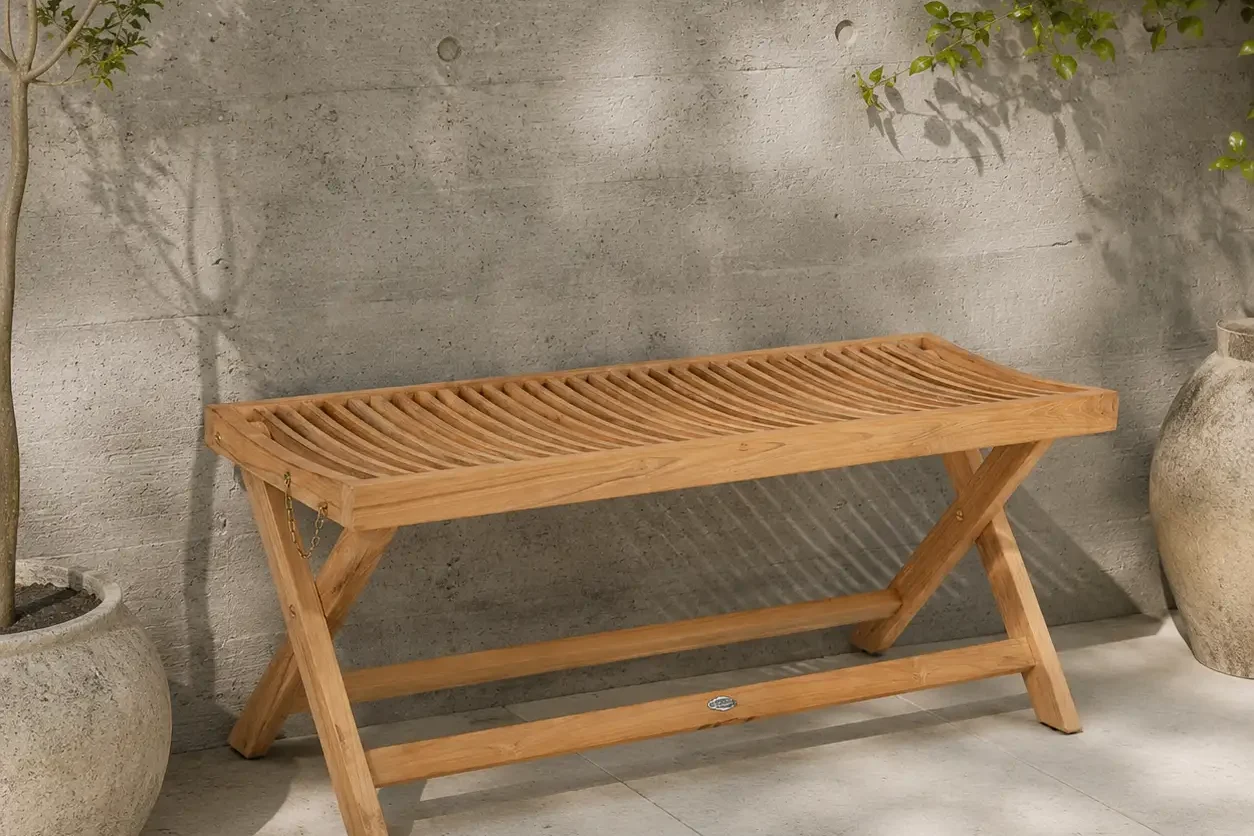
- Inside Indonesia’s Furniture Manufacturing Industry
- Indonesia vs. Vietnam: Which Is Better for Furniture Sourcing?
- When Should You Invest in Custom Furniture?
- #5 Reasons Global Buyers Prefer Indonesian Furniture Manufacturers
- How to Source Furniture from Indonesia: A Complete Guide for Hospitality & Design Buyers
Related posts
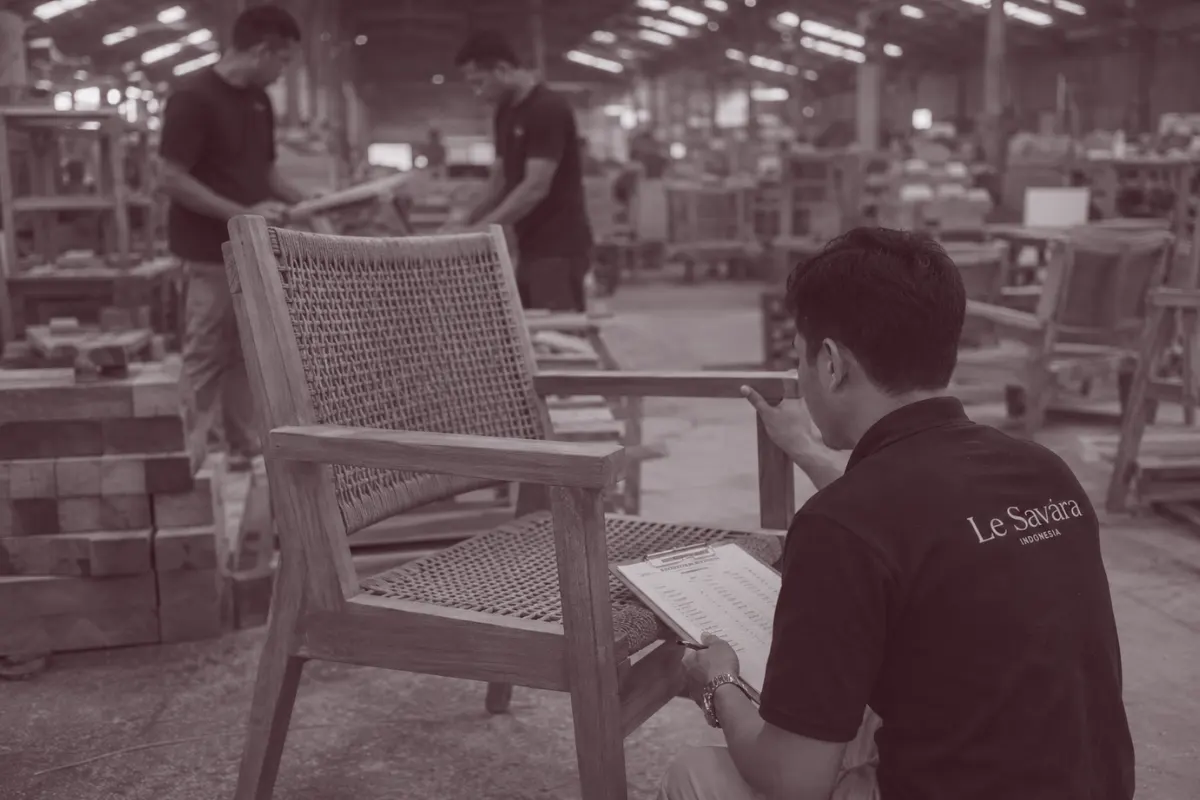
#5 Reasons Global Buyers Prefer Indonesian Furniture Manufacturers
From boutique hotels in the Mediterranean to luxury residences in the Middle East, Indonesian furnit …
When Should You Invest in Custom Furniture?
There is a moment in every growing furniture business when the catalogue that once felt like an adva …